

Where the Living Meet the Earth
Tracing how humanity built meaning from the quiet labor of farewell
The First Graves and the Birth of Memory
The earliest burials were not about grandeur but about recognition. Archaeologists uncover bodies laid gently within soil beside tools, shells, or pigments, and those gestures reveal the beginning of symbolic thought. To cover the dead was to protect, to mark, and to remember. In prehistoric caves, ochre stains around skeletons suggest an early belief that color could ease the passage from breath to silence. Over time, such acts formed the earliest architecture of emotion. The mound became a marker of identity, a small hill that declared both loss and continuity. Burial was humanity’s first attempt to speak to eternity using stone and soil as its language.
The Earth as Guardian
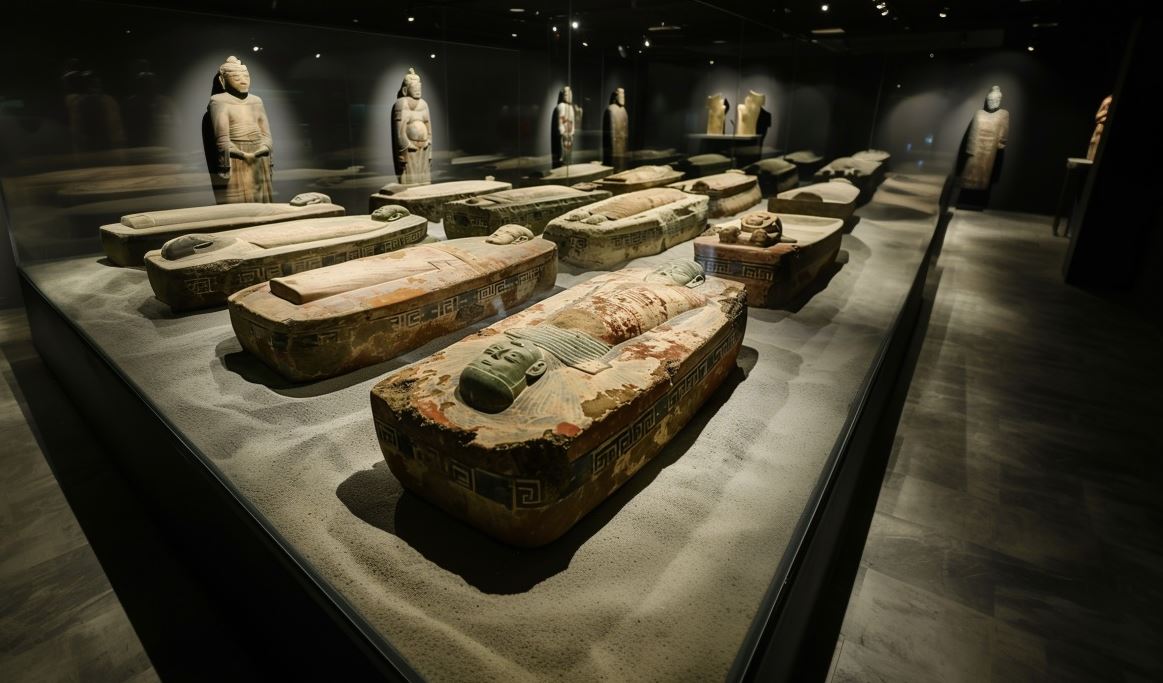
Every culture found a distinct way to let the ground receive its own. In ancient Mesopotamia, homes were built above family graves, ensuring that daily life unfolded over ancestral presence. Egyptians, surrounded by desert, transformed burial into art, wrapping bodies in linen to preserve form for the afterlife. Their tombs mimicked houses, complete with furniture and food. In China, emperors built entire subterranean courts populated by terracotta companions. Across Europe, megalithic tombs aligned with sunrise, uniting cosmic cycles with human destiny. Each variation rested on a shared intuition: the earth, though silent, is a trustworthy keeper of stories.
Fire and the Idea of Transformation
Not all societies turned downward. Some turned toward flame. Cremation reframed death as a process of release rather than containment. The smoke that rose from pyres carried the spirit upward, cleansing it of bodily weight. In Vedic India, priests read hymns while tending fires that linked heaven and ground through heat. In ancient Greece, soldiers received funeral pyres that lit the night, ensuring honor through brightness. Among Norse cultures, ships burned upon waves to send their dead across both water and sky. Fire taught that endings could resemble beginnings, that destruction might also be purification. The ashes that remained became seeds of remembrance.
Mounds, Monuments, and the Politics of Rest
Wherever humans organized power, death acquired hierarchy. Kings demanded tombs that rivaled palaces, built not merely for memory but for control over legacy. The Great Pyramid of Khufu rose from the desert like a frozen prayer to permanence. In the Andes, noble dead were mummified and brought out during ceremonies so that their presence could bless civic order. In early China, royal tombs held weapons, coins, and musicians sculpted in clay. The grave became a mirror of rule, ensuring that authority outlived mortality. Even modest communities adopted miniature versions of elite practice, proving that burial rituals shape social structure as much as belief.
The Sea as Cemetery
For those whose lives belonged to water, burial followed the tide. Mariners who perished far from land were committed to the deep, wrapped in sailcloth and weighted with stone. In Polynesia, islands held secret coastal sites where bones were placed inside coral caves to guard them from theft and to hide them from enemy eyes. Vikings launched burning ships to let the ocean claim both vessel and voyager. In modern times, sailors’ cemeteries stand on cliffs that face horizon, their headstones leaning toward the wind as though listening for returning waves. The sea, ever restless, became the most democratic grave of all.
Silence, Mourning, and the Shape of Ritual
Funeral customs reveal how societies handle grief. Some require public weeping, others demand restraint. In ancient Japan, mourners covered mirrors so that wandering spirits would not be trapped. In Greece, women led laments, using rhythm and voice to contain sorrow. In parts of Africa, drummers announced death to nearby villages, turning sound into communal language. Later, Christian bells echoed that practice, calling both memory and prayer. Whether through music or quiet, societies taught that grief must move, must have form, or else it devours those who hold it. Ritual turned pain into structure, a bridge across chaos.
Objects of Farewell
Graves serve as museums of intent. Pottery, beads, weapons, and clothing accompany the deceased not merely for vanity but for continuity. The spear of a warrior promised protection, the necklace of a mother promised comfort. Coins placed on eyes or tongues paid symbolic tolls across imagined rivers. In some Pacific cultures, carved effigies ensured the dead could still witness ceremonies. These offerings illuminate values: courage, fertility, trade, and artistry. When excavated, they whisper across centuries that remembrance is not passive. It is an art form practiced through matter.
Tombs as Texts
Before paper, stone recorded belief. Inscriptions carved into sarcophagi instructed the dead on navigating afterlife trials. Egyptian hieroglyphs detailed spells, while Roman epitaphs offered jokes, philosophy, or warnings to grave robbers. In Mesoamerica, stelae illustrated genealogies and celestial alignments. Medieval Europe inscribed prayers for salvation, merging literacy with faith. The tomb was both archive and confession, combining art, language, and geometry into a single enduring document. To read a grave is to overhear the conversation between mortality and imagination.
Preservation and the Science of Decay
From mummification to embalming, humanity has long struggled between honoring the natural process of decay and resisting it. Egyptian embalmers used resins and salts to halt decomposition, transforming bodies into time travelers. The Chinchorro people of South America perfected similar methods thousands of years earlier, though without written religion. In the frozen tundra, nature performed the work unasked, preserving tattoos and hair that outlasted empires. Modern embalming blends chemistry with ceremony, prolonging display so that grief can synchronize with reality. Each approach carries its own philosophy: whether death should be accepted as dissolution or delayed as homage.
Grave Goods and the Economy of Eternity
Burial also reflected material networks. Exotic shells in desert tombs and Baltic amber in Mediterranean graves prove that trade reached beyond life itself. People paid for items that had no earthly use except to secure comfort in the unseen. Such artifacts demonstrate how faith and economy entwined. A merchant might invest as much in his afterlife attire as in his caravan, seeing both as journeys requiring provision. Even modest burials reveal microcosms of economy: the exchange of labor, craft, and hope directed toward an audience of gods or ancestors.
Graveyards as Social Maps
The layout of cemeteries tells the story of community. In ancient Athens, warriors rested along the city walls so citizens would remember the cost of protection. Medieval churchyards placed the wealthy near sanctuaries and the poor at boundaries, turning geography into theology. Family plots created visible genealogies, while mass graves from plagues erased hierarchy entirely. Today, cemeteries remain records of urban planning and migration. Their stones and alignments mirror the living world that built them, showing who belonged, who was excluded, and what virtues a society chose to immortalize.
Exposure, Sky, and the Refusal of Burial
Not every culture entrusted bodies to earth or flame. In the high plateaus of Tibet, practitioners of sky burial offered remains to vultures, seeing generosity in decomposition. The act expressed the idea that even in death, one sustains life. Similarly, among Zoroastrians, Towers of Silence allowed sunlight and birds to complete the final rite, maintaining purity by avoiding soil and fire. Such practices reflect cosmologies where decay is not shameful but sacred, a necessary return of substance to the wider world. In these traditions, death concludes not with concealment but with dispersal.
Burial as Architecture of Power
Across civilizations, monumental tombs have served as declarations of legitimacy. Mausoleums in Persia, stupa complexes in South Asia, and crypts beneath cathedrals all demonstrated that authority wished to outlast the body. Builders aligned these structures with stars, mountains, and rivers to suggest divine sanction. Yet the same grandeur that immortalized rulers also inspired rebellion, as later generations stripped gold or repurposed stone. Even in ruin, these monuments command attention, proving that death has always been both personal and political, both devotion and display.
Reburial and the Ethics of Return
Modern archaeology faces dilemmas that ancient builders never imagined. When bones emerge from soil, they bring questions about ownership and respect. Descendant communities often request reburial, seeing disturbance as a second death. Museums that once prized mummies now wrestle with the morality of display. Some nations have begun repatriating remains across oceans, restoring dignity where curiosity once prevailed. These acts mark a shift in perspective: from study to stewardship, from fascination to reverence. The dialogue between science and spirit continues, reshaping how the past is handled in the present.
New Rituals for New Eras
Industrial cities transformed death again. Crematoria replaced churchyards as populations grew. The anonymity of urban life produced cemeteries that resembled parks, offering solace through greenery. In the twenty-first century, ecological burials return to simplicity. Bodies wrapped in biodegradable cloth feed forests, and coral reefs are seeded with cremated remains. Digital memorials preserve voices and images online, creating cemeteries without geography. Yet the motive remains constant: to weave loss into continuity, to locate meaning where absence once threatened to overwhelm. Innovation does not erase reverence; it modernizes it.
Symbols That Speak Beyond Words
Tomb art condenses philosophy into shape and line. The spiral signals eternity, the circle unity, the winged sun resurrection. Crossed tools, clasped hands, and carved animals carry messages to those who cannot read. In ancient Ireland, knotwork patterns encoded infinity, while in West Africa, geometric motifs translated proverbs into form. The modern gravestone continues this lineage, pairing names with emblems of profession, faith, or humor. Symbolism transforms the cemetery into a library of metaphors, each marker a sentence in humanity’s ongoing dialogue with loss.
Rites of Passage and the Continuity of Care
Funerals rarely end with burial. The living return with food, stories, and shared silence. Memorial feasts, anniversaries, and ancestor days renew bonds between generations. In Mexico, the Day of the Dead turns mourning into celebration through color and flavor. In Japan, Obon reunites families through lanterns that guide spirits home. These observances transform death from an interruption into a recurring visit. They sustain culture by insisting that memory is a form of participation, not nostalgia. To honor the dead is to practice gratitude disguised as ritual.
The Archaeology of Emotion
When researchers brush soil from ancient bones, they uncover not only evidence but empathy. A hand clasped around another in a joint grave reveals tenderness. Jewelry repaired before burial suggests care, while injuries treated long before death prove community support. Archaeology reads these traces as emotional syntax, showing that compassion predates modernity. The grave, stripped of superstition and wealth, remains a letter written by love in the grammar of earth.
Burial and the Idea of the Soul
Beliefs about the soul guided every decision about the body. Some imagined an underworld reached by descent, others envisioned ascent toward light, and still others saw rebirth through lineage. Burial practices became experiments in metaphysics. A tomb could be a gate, a womb, or a resting place depending on doctrine. What unites them is the assumption that death is not mere cessation but transition. Even in secular societies, this intuition lingers in words like rest, peace, and passage. The human heart continues to translate mystery into gesture.
Material Memory and Cultural Identity
Graves survive empires, and their endurance defines heritage. Archaeological sites become points of pride, pilgrimages, or conflict. Families trace roots through cemeteries, reading continuity in stone dates. Monuments destroyed by war or neglect cause collective mourning that mirrors personal grief. Preservation of burial sites is therefore more than historical—it is ethical, a commitment to remembering that every civilization is built on the patience of the buried. The land holds not only resources but relationships, layered in quiet testimony.
The Human Conversation With Death
Across continents and millennia, burial remains a dialogue between impermanence and meaning. Every mound, urn, or pyre answers the same unspoken question: how shall we continue loving what we must release? Through ritual, craft, and reverence, humanity transforms loss into culture. The grave becomes not an end but an archive, a promise whispered back to the sky that memory will not vanish with the body. In honoring the dead, we practice the art of staying human.